
Your Vacation Photos Are Outing You to Scams
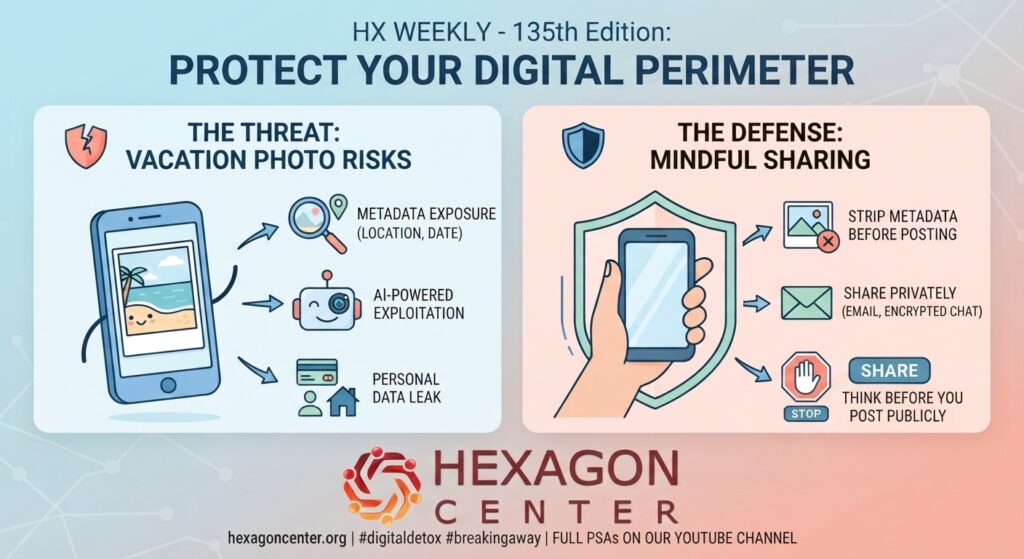
Welcome to the 135th edition of HX Weekly. We’ve been advising against posting real-time vacation photos on social media since the Hexagon Center first began, but today, the stakes are significantly higher. Advanced Ai-driven threats have turned your holiday memories into actionable intelligence for scammers, making “think before you share” a mandatory rule for the digital age.
The Week in Threats: Ai-Powered Exploitation
The headlines this week demonstrate that the barrier between “vacation fun” and “identity compromise” is virtually non-existent:
- Photo-Based Exploitation: Attackers are using Ai to scan holiday photos for location data, behavioral patterns, and personal context. Even when you aren’t posting your address, the hidden metadataattached to your images (GPS coordinates, device info, and timestamps) provides a treasure map for bad actors.
- Ai-Driven Fraud: Android banking attacks like ToxicPanda 2.0 and GoldDigger are now deploying on-device fraud, proving that your mobile device is a prime target for automated theft.
- Infrastructure & Intelligence: The FBI is investigating a bizarre breach where the U.S. government unwittingly hired a North Korean IT worker. Meanwhile, intelligence agencies are warning that hackers are aggressively using Ai-generated tools to attack critical infrastructure technology.
- Ai-on-Ai Warfare: We’ve reached a strange tipping point: an Ai failed to detect a bug in Snowflake’s code, and another Ai agent successfully exploited it. Furthermore, researchers are warning of Ai “mind viruses” that can spread between agents via persistent prompt files.
Persistent Digital Hazards
Beyond Ai threats, standard exploitation remains relentless:
- Platform Fragility: Microsoft recently confirmed a worldwide GitHub outage, a stark reminder of our reliance on single-point-of-failure infrastructure.
- Malware Factories: The StopAndProtect campaign is currently abusing nearly 2,000 hacked WordPress sites to propagate malware and harvest user data.
- Physical Surveillance: Researchers have successfully used machine learning to create an “invisible” car, effectively hiding vehicles from security cameras like those used by Flock—a technology that is also under heavy scrutiny for its new Ai-powered police tools.
What Now? Protect Your Digital Perimeter
You don’t have to stop sharing your life, but you must stop sharing it indiscriminately.
- Scrub Your Metadata: If you must share, use tools to strip the EXIF/metadata from your photos before posting. If you aren’t sure how, stick to sharing photos privately via email or encrypted messaging services with trusted friends and family.
- Mindful Tech Habits: Cultivate daily micro-habits to manage your digital footprint. Our latest More Youdigital detox PSA highlights how shifting from reactive to intentional sharing can save you from a major security headache.
- Watch for Vishing: Our new Vishing 1/4 PSA breaks down the Ai twist in voice-based phishing. Take a moment to watch it—it could be the difference between spotting a scam and falling for one.
Inside Hexagon: Our Mission Continues
We’ve been warning about these dangers for years, but the sophistication of current attacks means our educational mission is more vital than ever. While we have many ambitious projects in the pipeline, you can find the majority of our current programs, cybersecurity PSAs, and digital hygiene tips on our YouTube channel.
Join us, stay educated, and keep your personal data personal. Subscribe to HX Weekly at hexagoncenter.org
.
Stay vigilant,
— The Hexagon Center Team