

The Invisible Threshold: Living in a Vulnerable World
There is a strange, quiet friction to modern life. We surround ourselves with convenience—smart fridges, connected cars, televisions that stream our favorite escapes, and phones that hold our entire lives. We trust them. But this week’s 122nd edition of HX Weekly gently, yet directly, pulls back the curtain on a sobering reality: the very products we rely on every day are the primary targets of cybercriminals.
It forces us to ask a deeper question: at what point did convenience outpace our safety?
The Echo Chamber of Vulnerability
This week’s headlines aren’t just about code; they are about the erosion of the safe spaces we take for granted.
- The Everyday Exploit: It stretches from hundreds of fake Android apps silently charging users, to scammers abusing internal Microsoft accounts to push spam, all the way to a newly warned Exchange Server zero-day exploited in the wild. Even Google API keys are lingering, remaining functional long after users believe they’ve deleted them.
- The Smart Home Risk: When security experts warn us to “keep an eye on your laundry,” it ceases to be a joke. Our smart devices are gateways. The threat was made chillingly clear by a report detailing how a single “zombie” user account allowed hackers to gain control of a city’s water supply.
When a rogue account can touch the water we drink, cybersecurity stops being an IT problem—it becomes a matter of human survival.
The Irony of the Machine
We often look to technology to solve the problems technology creates. This week, we saw that Google’s surge in discovering Chrome vulnerabilities is likely being driven by AI.
Yet, there is a profound, almost poetic irony weaving through the digital landscape right now. AI might help us cut down on false positives, but it isn’t stopping the “slop.” Look no further than the newly highlighted book about Truth in the Age of A.I.—which was discovered to contain quotes entirely fabricated by AI itself. We are building systems to protect us, while simultaneously drowning in the untruths they generate.
What it Means to Defend Our Infrastructure
You might notice that certain massive global events or political headlines seem missing from our updates. We intentionally avoid the political noise, but we never overlook the core issues. This week, we chose to focus heavily on the tightening security surrounding critical infrastructure.
With CISA now urging critical infrastructure sectors to ensure they can operate for “weeks to months” in complete isolation during a conflict, the message is clear. The digital ties that bind our world are fragile.
The Shift: From Street Smart to Cyber Smart
Most of us know how to navigate the physical world. We lock our front doors, we look both ways before crossing the street, and we watch our backs in unfamiliar places. We are street smart.
But as millions of people are impacted by sweeping US healthcare data breaches, and corporations like 7-Eleven face the fallout of confirmed data breaches from groups like ShinyHunters, we have to transition that intuition online. We have to become cyber smart.
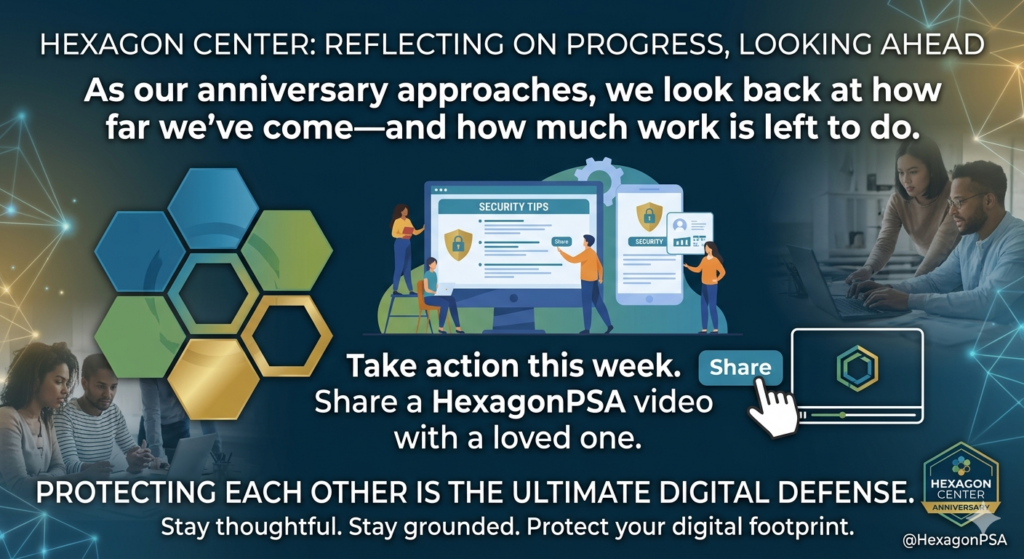
Inside Hexagon: As the Hexagon Center anniversary approaches, we are looking back at how far we’ve come—and how much work is left to do. Our Public Service Announcements (HexagonPSA) are designed to give you the exact tools you need to protect your smart devices. This week, take a moment to share a PSA video with a friend or a loved one. Protecting each other is the ultimate form of digital defense.
Stay thoughtful, stay grounded, and protect your digital footprint this weekend.
— The Hexagon Center Team